


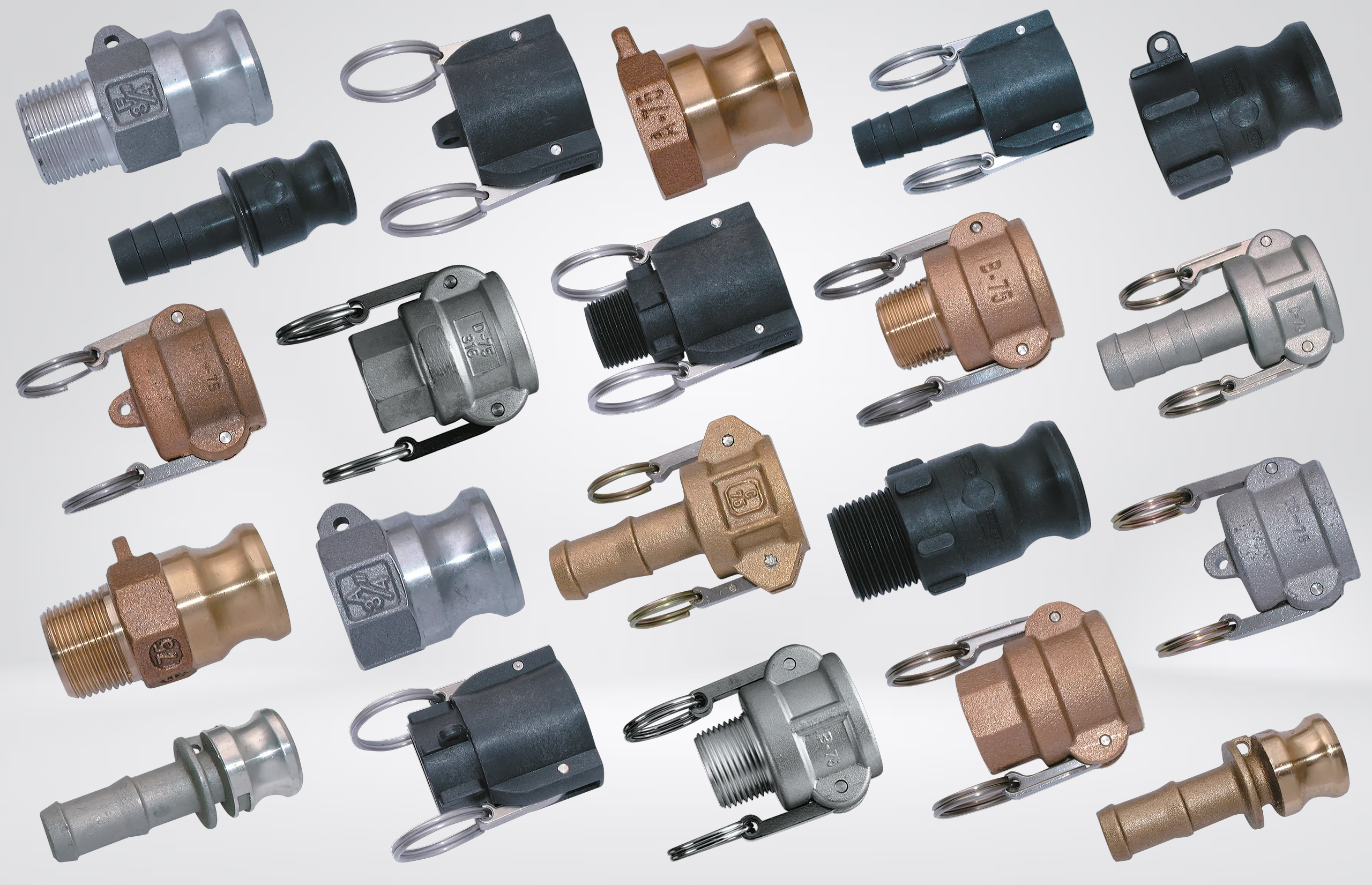
Selecting the right camlock fittings for chemical and fuel transfer is not just a matter of connection size or availability. Poor specification leads to leaks, seal failure, contamination, and in some cases full shutdowns due to safety risks.
Whether you are transferring diesel on-site, handling aggressive chemicals in a process line, or managing bulk liquids in transport, the wrong coupling will fail under pressure.
Why Camlock Fittings Are Widely Used in Chemical and Fuel Transfer
Camlock fittings are widely used because they offer a balance of speed, reliability, and repeatability. In environments where hoses are connected and disconnected regularly, threaded fittings are too slow and prone to damage. Camlocks solve that problem, but only when correctly specified.
Understanding where they work well and where they fail is key before looking at materials and configurations.
Quick Connection Without Compromising Safety
Cam and groove couplings allow operators to connect and disconnect hoses in seconds without tools. The cam arms create a tight mechanical seal, compressing the gasket evenly across the mating surface.
In fuel and chemical transfer, this matters because connection time is often when spills occur. A properly fitted camlock reduces exposure time and minimises the chance of operator error.
However, the seal is only as good as the gasket and material behind it. If either is wrong, the speed advantage becomes a liability.
Common Applications Across Industries
You will see camlock fittings used across multiple sectors where fluid transfer is routine. This includes fuel distribution depots, chemical processing plants, agricultural spraying systems, waste handling operations, and transport tankers.
In each case, the requirement is similar. A reliable, repeatable connection that can handle varying flow rates and frequent handling without degrading. The challenge is that the media differs significantly, which is where material choice becomes critical.
Comparing Camlock Materials for Chemical and Fuel Use
Each material option has strengths and limitations, and choosing based purely on cost often leads to problems later.
Stainless Steel Camlock Fittings
Stainless steel camlocks are typically the most robust option for chemical and fuel systems. They offer excellent resistance to corrosion, high temperatures, and mechanical wear.
In demanding environments, stainless steel provides long-term reliability where other materials degrade.
When Stainless Steel Is Essential
Stainless steel is the preferred choice when handling aggressive chemicals, high-temperature fluids, or where hygiene is critical. It is commonly used in chemical processing plants and environments where contamination cannot be tolerated.
It also performs well in outdoor or exposed environments where corrosion from moisture or chemicals is a concern.
Brass Camlock Fittings
Brass camlocks are widely used in fuel and oil transfer applications. They provide good corrosion resistance and are more cost-effective than stainless steel.
They are a practical choice where the media is less aggressive and operating conditions are controlled.
Where Brass Performs Well in Fuel Systems
Brass is well suited to diesel, petrol, and oil-based products. It is commonly used in fuel bowsers, tanker systems, and workshop setups where reliability is required without the need for full chemical resistance.
However, it should not be used with certain chemicals that may cause dezincification or corrosion.
Polypropylene (Plastic) Camlock Fittings
Polypropylene camlocks offer strong resistance to a wide range of chemicals, making them a popular choice in chemical handling applications.
They are lightweight and cost-effective but have limitations in terms of strength and temperature tolerance.
Ideal Chemical Handling Applications
Polypropylene is often used for transferring acids, alkalis, and other corrosive chemicals where metal fittings would degrade. It is particularly useful in lower-pressure systems and where weight reduction is beneficial.
However, it is not suitable for high-pressure fuel systems or applications involving elevated temperatures.
Overview of Camlock Types
Each camlock type is designed for a specific connection method. Some connect hoses to threaded systems, while others join two hoses together.
The complete list of available types can be seen below.
Type A – Female threaded plug, available in BSP or NPT in brass, stainless steel, aluminium or polypropylene.
Type B – Male threaded lever coupling, available in BSP or NPT in brass, stainless steel, aluminium or polypropylene.
Type C – Hosetail lever coupling, available to suit 1/2″ to 4″ hose in brass, stainless steel, aluminium or polypropylene.
Type D – Dust plug, available in brass, stainless steel, aluminium or polypropylene.
Type E – Hosetail plug, available to suit 1/2″ to 4″ hose in brass, stainless steel, aluminium or polypropylene.
Type F – Male threaded plug, available in BSP or NPT in brass, stainless steel, aluminium or polypropylene.
Locking Arms, Safety Clips, and Pressure Ratings
Safety features are often overlooked but play a critical role in preventing accidental disconnection. Locking arms must be secure and properly engaged, and safety clips should be used where required.
Pressure ratings must also be matched to the system. Exceeding these limits can lead to sudden failure, particularly in fuel transfer applications.
Take Steps to Protect Your Chemical and Fuel Systems
Incorrectly specified camlock fittings are a common cause of leaks, failures, and unnecessary downtime. In chemical and fuel applications, the risk is higher due to the nature of the media and the operating conditions.
Getting the specification right means understanding compatibility, selecting the correct materials, and ensuring the entire system is designed to handle the specific application.
If you are reviewing an existing setup or planning a new installation, now is the time to assess whether your fittings are fit for purpose.
Explore our range of camlock fittings for your application.
For technical support or to discuss your requirements, contact the expert team at Hoses Direct below:
Email: [email protected]
Phone: 0333 6000 501